The Planning Behind a SmartPads Set Day
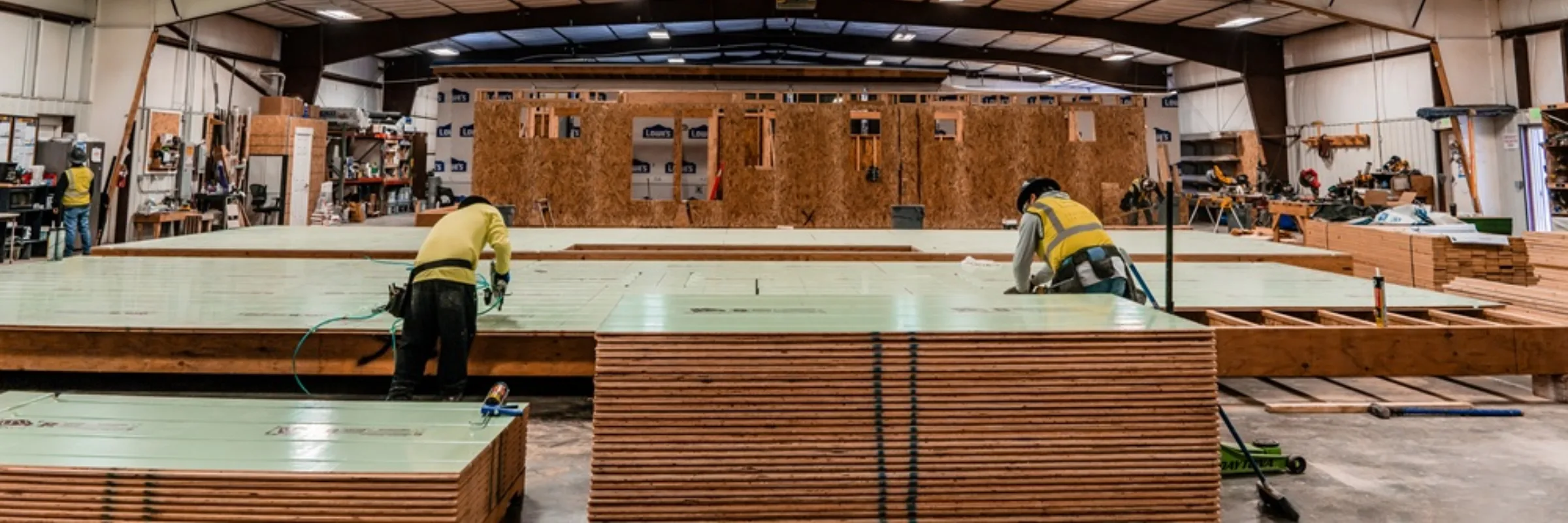
The set-day videos we share can make moving a home look almost too simple. A truck arrives, a crane lifts a section into place, and just like that there’s a house. But, in reality, it’s what happens before that makes this possible. Before a module leaves our Vernal facility, the team has addressed all the elements to a very practical question: Can this home travel all the way to its site and be lifted into place?
Designed for Life and the Miles to Get There
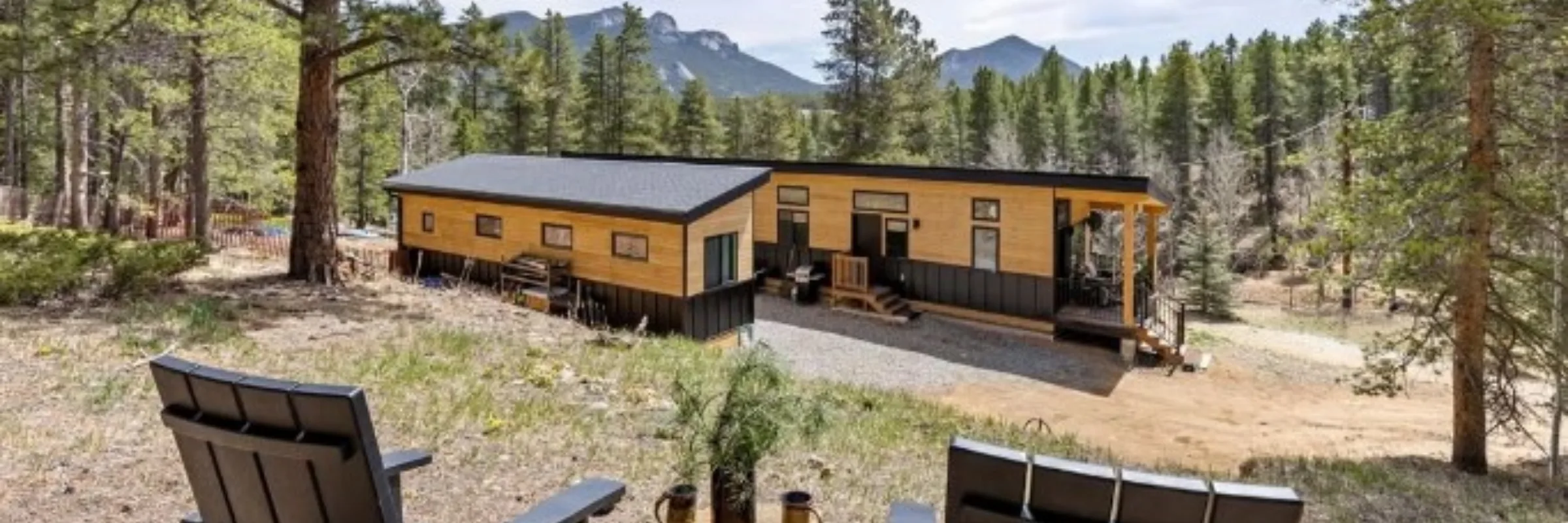
What makes our design process different from a site built home is through it we are thinking about how the home can be moved from where it is built to the site, which can be hundreds of miles away. Our smallest homes are just one mod, and our largest home to date is 7 mods. These are sections of the home, designed to fit the bigger picture, but travel in sections, each carried on a separate truck. That means the dimensions and weight of each module matter during design. The sections must also be built to withstand transportation and lifting before they become part of the completed home, as the Modular Building Institute explains.
This is one reason site access comes up so early in a SmartPads project. A beautiful design also needs a workable path from the factory to the foundation.
Engineered for Elevation and Transportation
A SmartPads home also has to do something a site-built room never does, which is to withstand movement while it travels down the highway and is lifted by a crane. Engineering accounts for those forces in addition to the loads the finished home will face. That extra stage of engineering is especially relevant for mountain homes, where the roof must also be designed for the snow load at its specific site. The trip doesn’t make a roof snow-ready on its own, but both demands are built into the structural plan from the start.
Getting the Modules Road-ready
By the time a SmartPads home leaves the factory, much of the interior work is done. But it can’t simply roll out the door as though it were already sitting on its foundation. Each module is wrapped to protect it during the trip. Items that need to travel with the home but can’t be installed yet (called ship-loose items) are bundled, inventoried, and secured so they’re ready for the site crew. SmartPads’ process page includes a ship-loose inventory and installation information as part of the handoff for site finishing.
There’s also a deliberate stopping point in the factory. Some work can only happen once the modules are set side by side: joining the sections, completing connections between them, and finishing the areas where they meet. The goal is to do as much as makes sense indoors while leaving the site crew everything they need to complete the home after set day.
Planning the Route
The transport team plans around the loaded truck’s height, width, length, weight, and turning needs. A route that works for a regular truck may have a low bridge, a tight corner, a construction restriction, or another obstacle for a house-sized load. If you’re curious to learn more, take a look at the Federal Highway Administration’s route-planning guide to learn how routes are surveyed and permits required to specify where a load may travel. Permits can also set travel times and escort requirements, which vary by jurisdiction.
Depending on the load and route, the move may require pilot vehicles or other coordination. Every home is a new puzzle to solve, and access can be a big piece of that puzzle.
The Last Mile is Often the Most Tricky
The highway is only part of the journey. Long before the set day, the team works out how each truck will reach the property, where it can turn, and where the modules will be staged while they wait. In rural and mountainous sites, the driveway, slope, trees, overhead lines, and available space can all shape that plan.
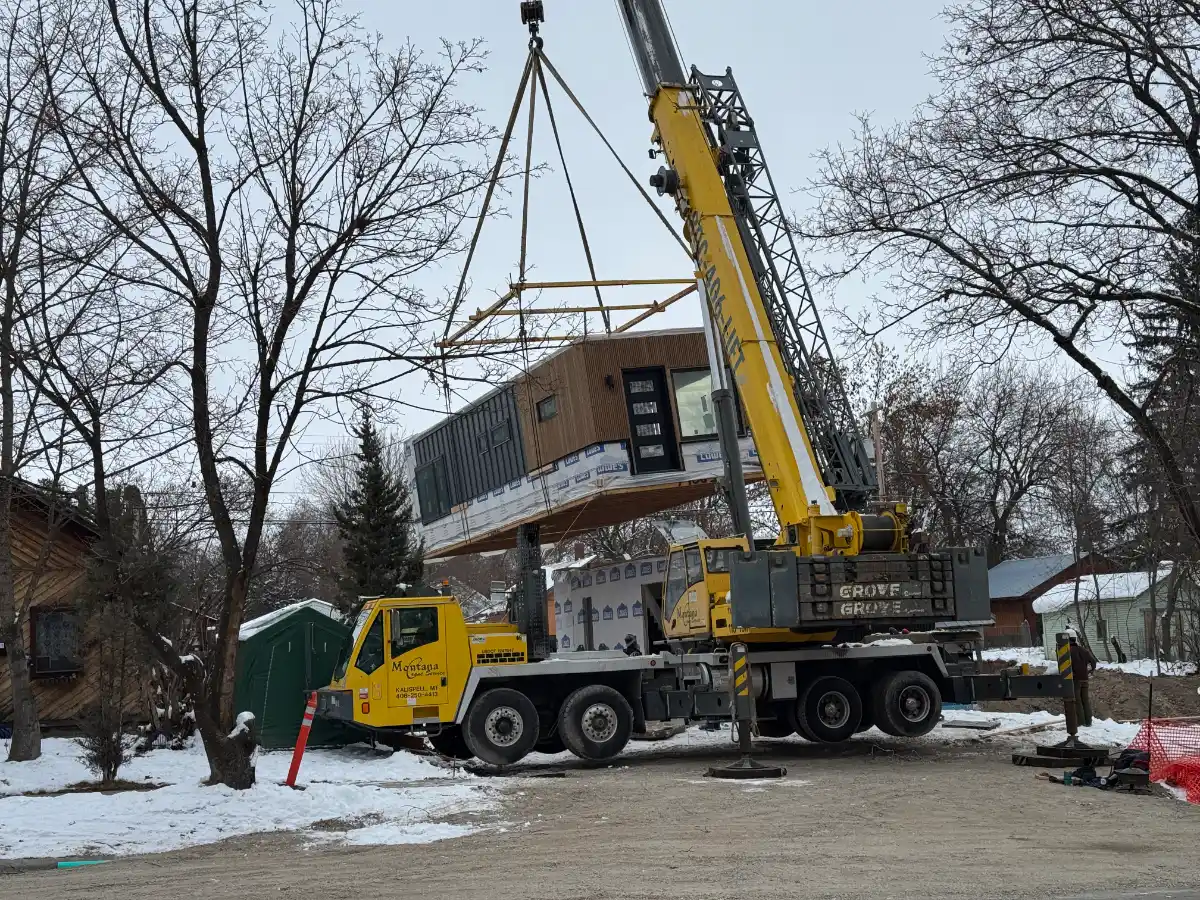
On set day, the trucks wait at the staging area. The crane operator and set team first need to get in place and get ready. Then it’s time to transfer the mods from the truck to the foundation. The trucking company brings each module to the site in the order the set crew needs it. That timing matters as there has to be room for the truck to pull in, for the crane to lift the module into place, and for the truck to move out before the next one arrives.
The Instant Gratification Moment
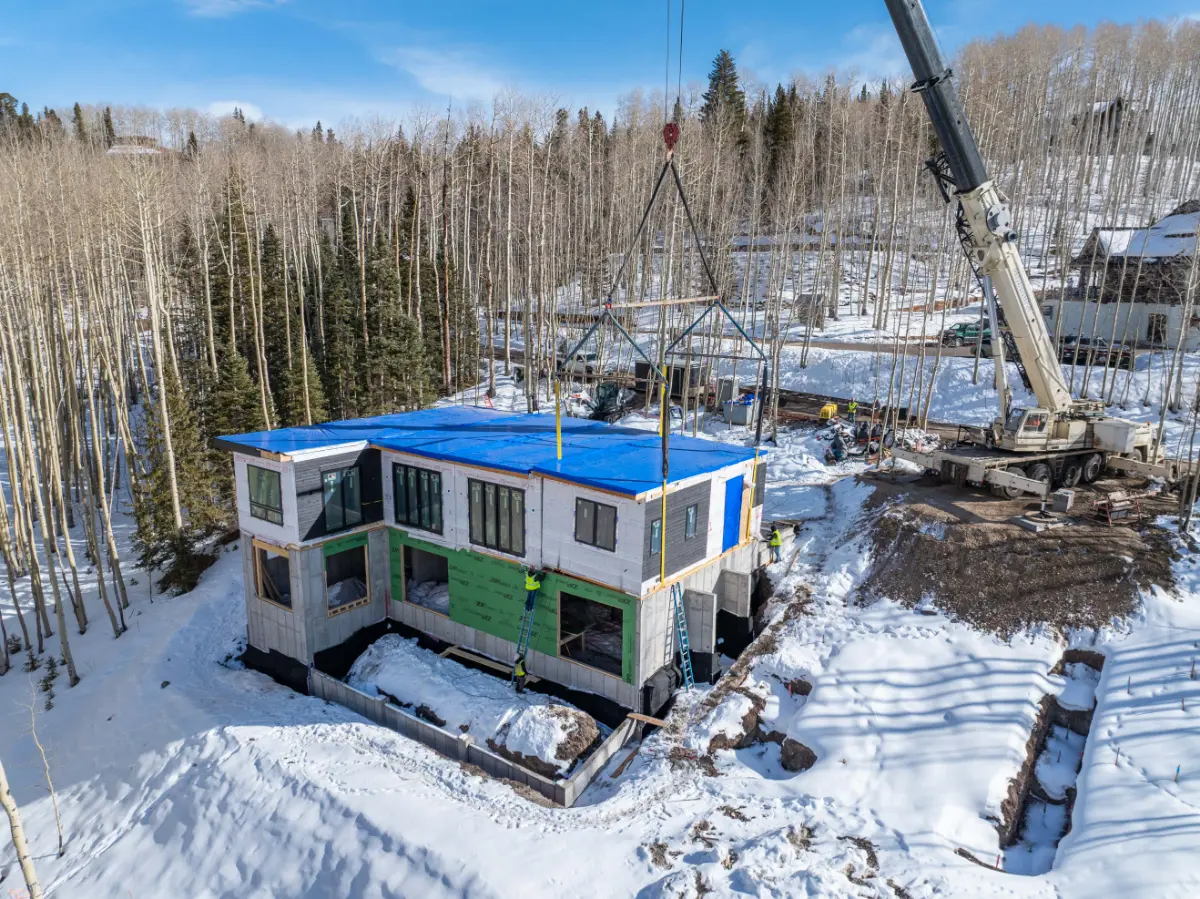
Set day brings three crews together: Traction Trucking delivering the modules, Setworks positioning and securing them, and Terry's Crane and Rigging lifting each one into place. The teams we work with are top notch. They’ve worked together on many homes, and it shows. It’s fascinating to watch how they communicate, from guiding a truck into position, preparing the next lift, and making small adjustments as each module settles onto the foundation. Everyone knows their part, and the whole thing moves with a rhythm that comes from lots of experience.
Then What?
The home is set, the equipment has moved out, and the spectators have gone home. Now it’s time for the crew on site to finish things up so the home is ready for move in day. All this while the team at our Vernal facility are already deep into building the next home and the set day crews have moved on to their next one. It’s a process that works well because of a strong vision, detailed systems, loads of experience, and people who care about making the home building process better.
If you’re thinking about building a SmartPads home, we would love to hear more about what you have in mind, and see if SmartPads is a good fit. Start Here.