Fire-Resistant Home Design & Building in the West
Wildfire season has become an expected part of life across much of the American West. As climate conditions shift and development expands into rural and wildland-urban interface (WUI) areas, considering fire-resistant strategies when building a home is essential.If you’re planning to build in a wildfire-prone area, choosing fireproof building materials and applying smart design strategies can significantly increase your home’s chance of surviving a wildfire. While no structure is completely fireproof, at SmartPads we consider it a priority to encourage homeowners to follow these best practices.
Why Fire-Resistant Construction Matters
A fire-resistant home is designed to do two things: reduce the risk of ignition and slow the spread of fire. That includes everything from the materials used in construction to the way your property is landscaped. Many of these strategies, particularly for roofing, siding, and defensible space, are already required by local building codes in wildfire-prone counties like Summit County, Eagle County, and Boulder County in Colorado, as well as Gallatin County, Montana, and Teton County, Wyoming.Here’s what to consider when building in a wildfire zone.
Best Roofing Materials for Fire-Resistant Homes
The roof is one of the most vulnerable parts of any home during a wildfire. Wind-blown embers can land on the roof and ignite flammable materials or slip into gaps and cracks if not properly sealed.Top roofing choices for wildfire-prone areas:
- Standing seam metal roofing – Durable, noncombustible, and sleek
- Clay or concrete tiles – Fire-resistant and long-lasting
- Class A asphalt shingles – Cost-effective with high fire ratings
In most WUI zones, Class A fire-rated roofing is a code requirement. Counties such as Eagle County and Boulder County, Colorado, enforce these standards to reduce structure ignition risk in high-fire zones.
Fireproof Siding Options for Wildfire Zones
Your home’s siding is another crucial line of defense. When building in areas at risk of wildfires, avoid vinyl or untreated wood siding, which can melt or ignite under extreme heat.Recommended fire-resistant siding materials:
- Fiber cement board – Combines durability with noncombustibility
- Stucco – Seamless and non-flammable
- Metal panels – Heat- and flame-resistant with a modern aesthetic
In areas like Summit County, CO, and parts of Gallatin County, MT, noncombustible or ignition-resistant siding is recommended, and often required for new construction near wildland areas.
Windows, Doors, and Ember Defense
Windows can shatter from intense heat, allowing fire to enter the home. Similarly, standard doors may not offer enough resistance to heat or flames.Best practices for fireproof window and door design:
- Use dual- or triple-pane tempered glass windows
- Opt for metal-framed windows and doors
- Install fire-rated exterior doors - especially at entry points and garages
Tempered glass and fire-rated doors are widely encouraged and sometimes required for fire-resistant home design in WUI-adopted code areas across Colorado’s Front Range counties, where ember exposure is a leading cause of home ignition.
Fire-Resistant Decking and Eaves
Decks and overhangs are particularly vulnerable since embers tend to collect underneath them.Fire-resistant design tips:
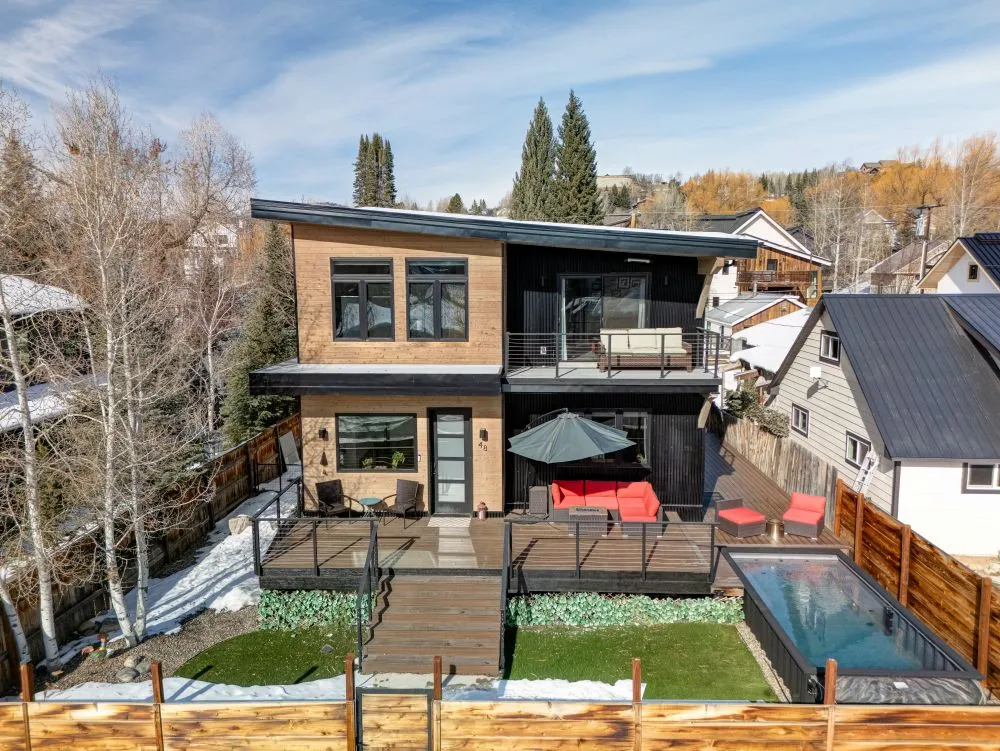
- Use noncombustible decking materials, such as metal or fire-rated composite boards
- Enclose the underside of decks to block ember intrusion
- Eliminate gaps where embers could lodge or smolder
Jefferson County and Summit County, CO, now require ignition-resistant decking and enclosed undersides in new builds in wildfire zones.
Protecting Your Home With Ember-Resistant Vents
Even small details like soffits and vents can become entry points for fire.Strategies for ember protection:
- Install ember-resistant vent covers with fine metal mesh
- Choose enclosed or boxed-in eave designs that minimize exposure
1/8-inch mesh vent covers are a standard requirement in many WUI codes, including in Eagle County, Colorado, and Teton County, Wyoming.
Defensible Space: Your First Line of Wildfire Defense
Beyond the home itself, managing your property is one of the most effective fire prevention strategies. Creating defensible space reduces fuel and gives firefighters a chance to protect your home.Recommended defensible space zones:
- Zone 1 (0–5 feet): Keep this area free of flammable materials. Use gravel, stone, or hardscaping.
- Zone 2 (5–30 feet): Use fire-resistant plants and maintain low vegetation.
- Zone 3 (30–100+ feet): Remove dead trees and thin dense forested areas.
In Gallatin County, MT and Summit County, CO, defensible space is enforced through wildfire mitigation plans required during the building permit process for fire-resistant home design.
Building in the West: How SmartPads Approaches Fire-Resilient Design
For those building in the West, wildfire resilience goes beyond just a nice-to-have; it’s a core part of responsible design. At SmartPads, we work closely with homeowners to advise on fire-resistant materials, noncombustible exterior options, fire sprinkler requirements, and site-specific strategies that support long-term safety and peace of mind.From roofing and siding to venting and defensible space, we help each homeowner understand their options and make informed decisions that match both their aesthetic goals and the realities of building in a fire-prone region. We also stay up to date with evolving local codes, particularly in counties like Routt, Eagle, Summit, and Boulder, to ensure our homes not only meet requirements, but go beyond them where it matters most. If you're curious about building with SmartPads and want more information about pricing and our homes, please fill out this contact form with information on your project.